Full Renovation |
Florida Humidity Changes the Rules
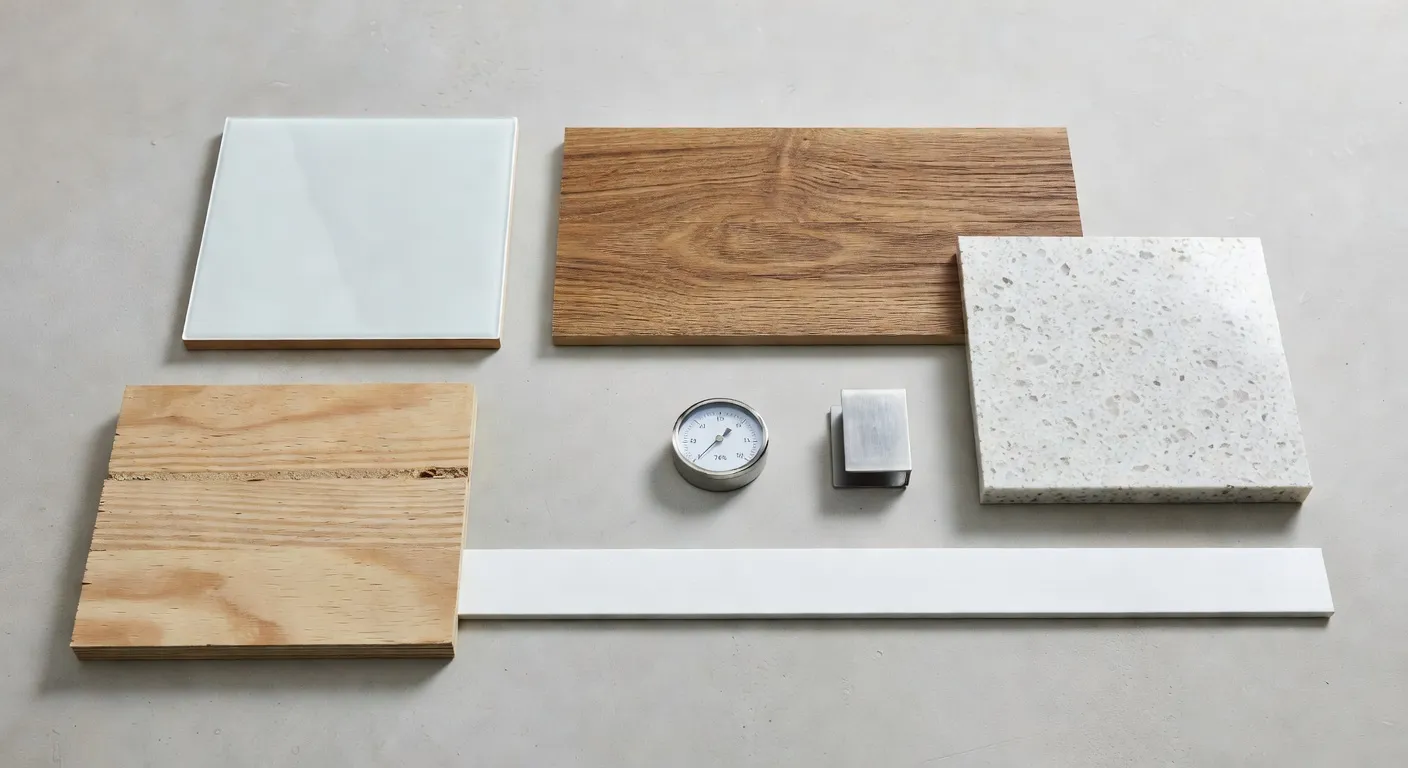
South Florida averages 74% relative humidity year-round. Materials that work perfectly in drier climates can warp, mold, swell, or degrade here. Choosing the right materials during your renovation isn’t just about aesthetics — it’s about longevity.
Kitchen
Countertops
- Best: Quartz — non-porous, won’t harbor mold, zero maintenance
- Good: Granite (sealed annually) or porcelain slab
- Avoid: Marble in high-use areas — it’s porous and stains easily in humid environments
Cabinets
- Best: Plywood boxes with solid wood or thermofoil doors — plywood resists moisture better than particleboard
- Good: Marine-grade plywood for under-sink cabinets
- Avoid: MDF and particleboard — they swell and disintegrate when exposed to moisture
Flooring
- Best: Porcelain tile or luxury vinyl plank (LVP)
- Good: Engineered hardwood (with proper AC)
- Avoid: Solid hardwood — it will cup and warp without strict climate control
Bathroom
Walls
- Best: Porcelain or ceramic tile in wet areas, mold-resistant drywall (green board or purple board) elsewhere
- Avoid: Standard drywall in shower surrounds — it will fail
Shower
- Best: Porcelain tile with Kerdi or RedGard waterproofing membrane
- Good: Solid surface panels (Corian, cultured marble)
- Avoid: Natural stone without proper waterproofing — water will wick behind it
Fixtures
- Best: Solid brass (chrome or brushed nickel finish) — resists corrosion
- Avoid: Cheap zinc-alloy fixtures — they corrode quickly in humid environments
Living Areas
Flooring
- Best: LVP — 100% waterproof, handles humidity without expanding
- Good: Porcelain tile (especially with large-format tiles for fewer grout lines)
- Caution: Engineered hardwood works with consistent AC (keep home below 78°F and humidity below 55%)
- Avoid: Laminate in rooms that open to outdoors — humidity will buckle it
Trim and Baseboards
- Best: PVC or composite trim — won’t rot, swell, or need repainting
- Good: Primed MDF with quality paint (in climate-controlled interiors only)
- Avoid: Untreated wood trim at floor level — it absorbs moisture from tile floors
Exterior
Siding and Trim
- Best: Fiber cement (Hardie board) — moisture-proof, termite-proof, hurricane-rated
- Good: PVC trim and aluminum soffit
- Avoid: Wood siding — constant maintenance battle in South Florida
Paint
- Best: 100% acrylic exterior paint with mildewcide (Sherwin-Williams Duration or Benjamin Moore Aura Exterior)
- Avoid: Oil-based exterior paints — they don’t flex with Florida’s temperature swings
Decking
- Best: Composite decking (Trex, TimberTech) — no rotting, no termites
- Good: Ipe or other tropical hardwoods (naturally resistant but expensive)
- Avoid: Pressure-treated pine — it warps, splits, and grays quickly here
The Bottom Line
In South Florida, choosing materials rated for moisture and humidity isn’t premium — it’s baseline. The upfront cost of the right material saves you from costly repairs, replacements, and mold remediation down the road.
Need help selecting materials for your renovation? Book a free consultation and we’ll guide you through options that are built for our climate.
Ready to start your renovation project?
Call us at (754) 290-7172 or request a quote online.